
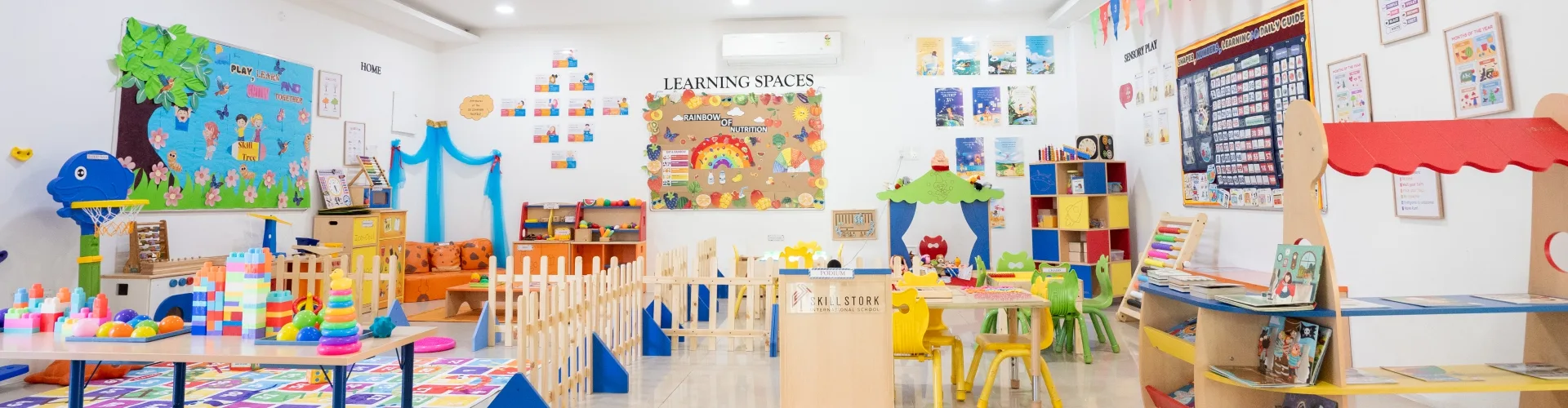
IB-EYP: Home Away from Home
A nurturing, play-based learning journey for children aged 2 to 6 — where curiosity, creativity, and holistic development take centre stage.
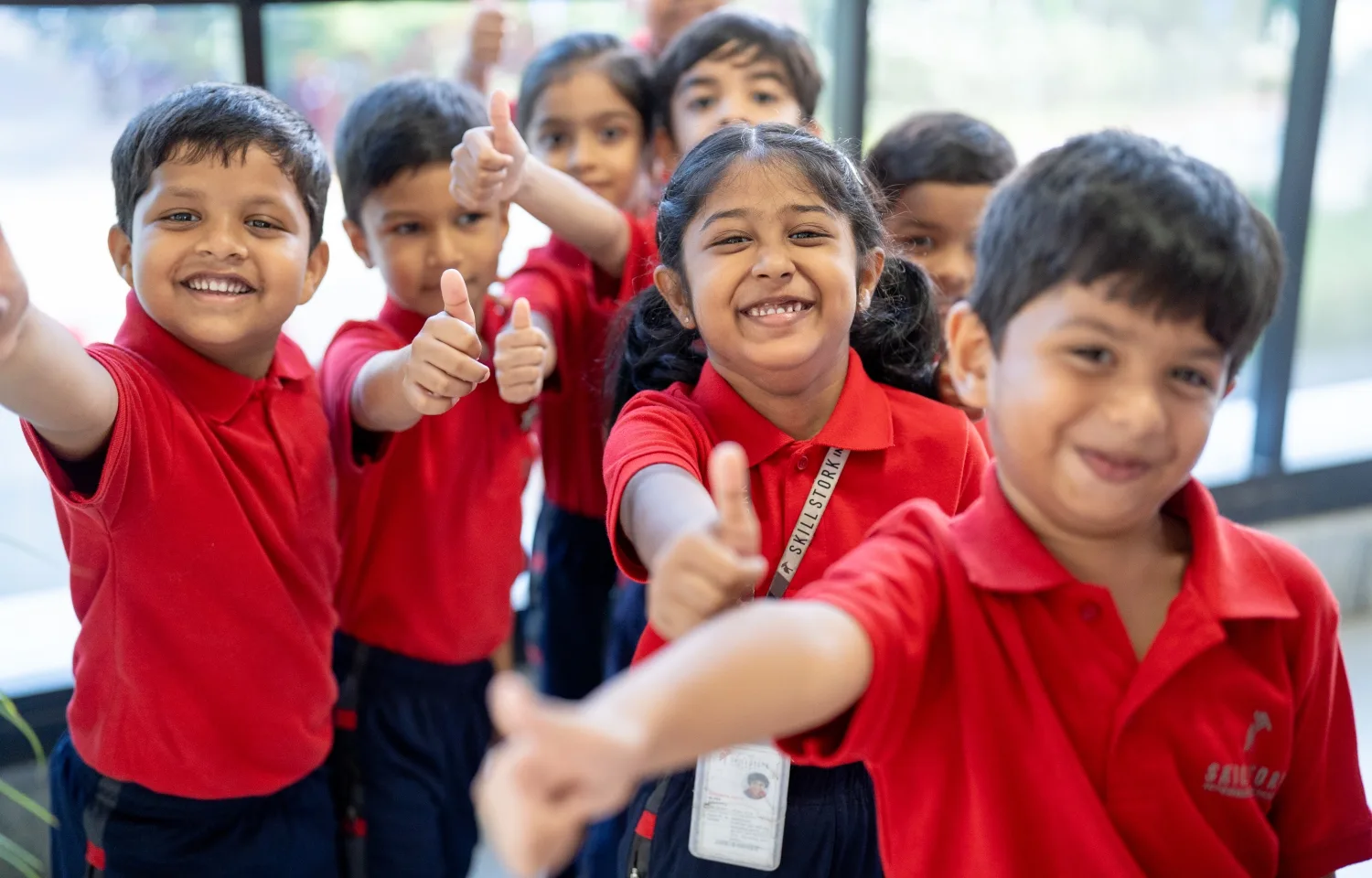
Our Full Day Program
Our full-day schedule is designed to provide a nurturing and enriching experience for children aged 2 to 6 years. We offer a bagless, boxless, and homework-free environment, promoting a healthy balance between school and family life.
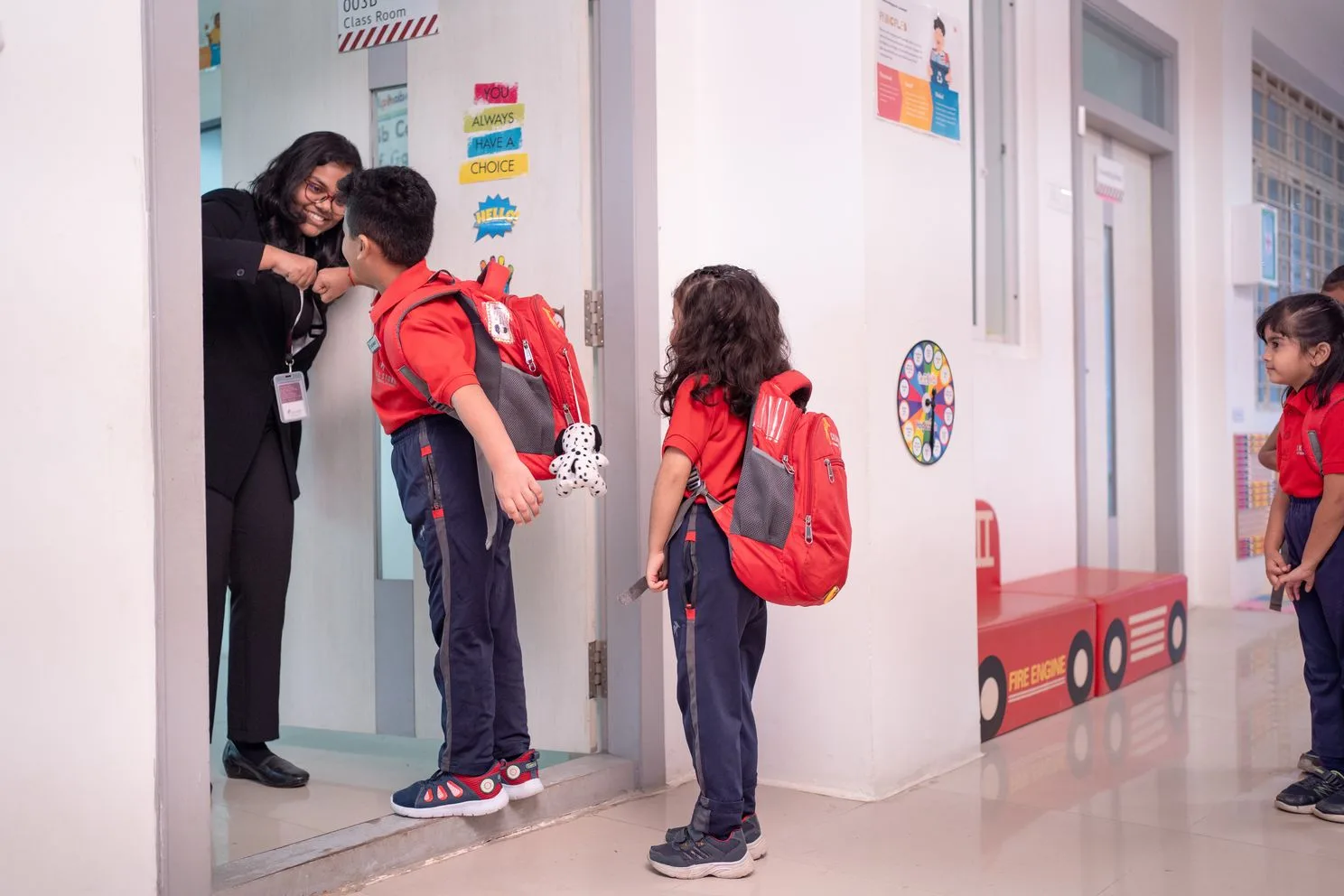
Age-Specific Learning
Our program is carefully structured to meet the unique needs of children at different stages of early development.
Pre-Nursery (Ages 2–3)
Our youngest learners enjoy a stimulating environment that fosters language development, social skills, and a love of learning through play and gentle exploration.
Nursery (Ages 3–4)
Children engage in a variety of hands-on activities that promote cognitive, physical, and emotional development, building confidence through structured and free play.
PP1 (Ages 4–5)
This stage focuses on building a strong foundation for future learning, with a focus on literacy, numeracy, and scientific inquiry through inquiry-based exploration.
PP2 (Ages 5–6)
Our oldest early years learners delve deeper into language, mathematics, and the arts, preparing them confidently for their transition to primary school.
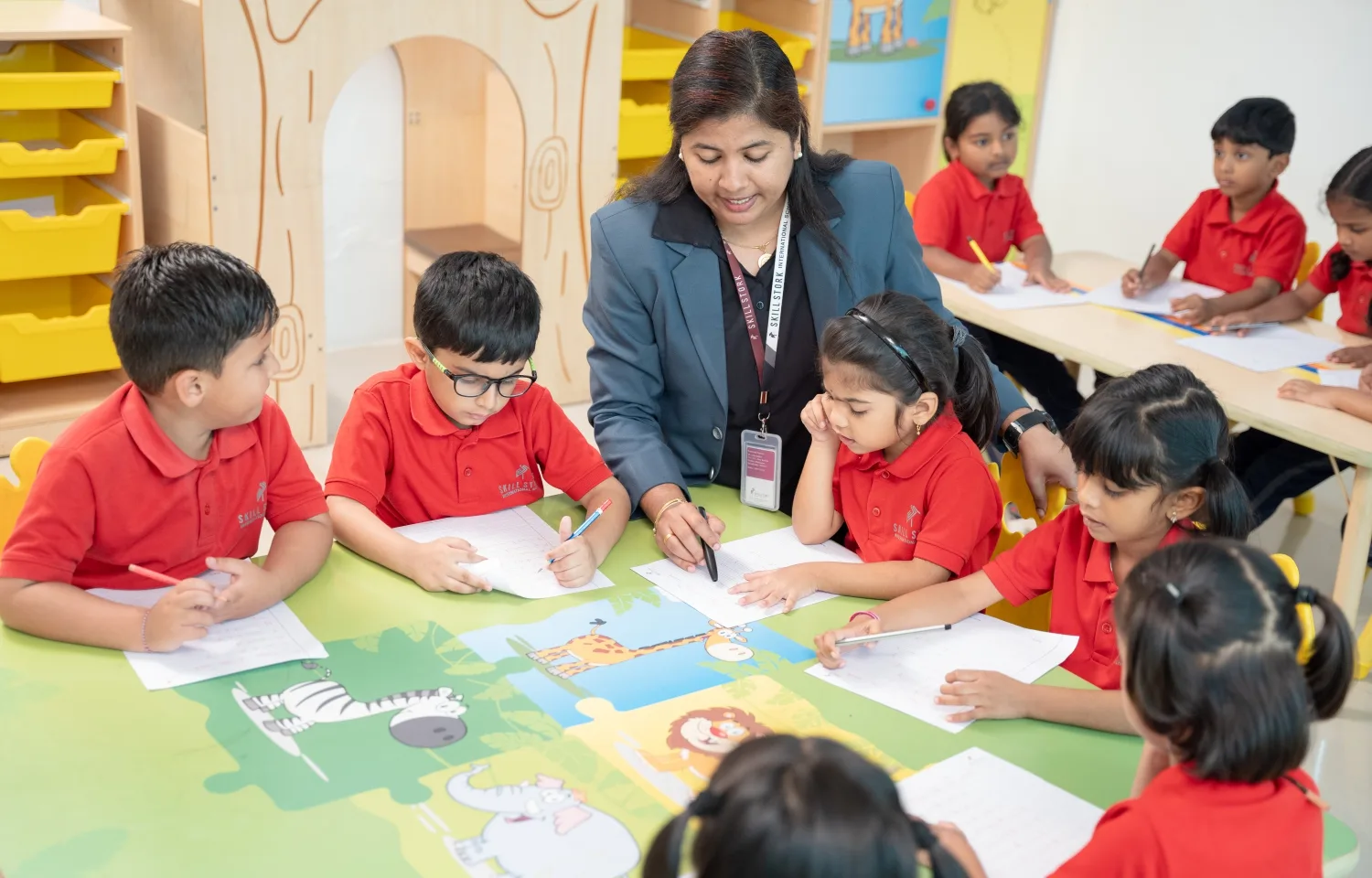
Day in the Life
Monday – Friday | Timings: 8:15 AM – 3:30 PM
| Time | Activity | Description |
|---|---|---|
| 8:15–8:40 AM | Check-in & Wake and Shake | Children arrive and participate in light physical activities to energise for the day. |
| 8:40–9:20 AM | Circle Time | Students come together, share thoughts, and prepare for the day's learning. |
| 9:20–9:50 AM | Breakfast | Nutritious meals are provided, encouraging healthy eating habits. |
| 9:50–10:30 AM | Special Assembly / UOI – Goal Setting | Children gather for special assemblies or explore Unit of Inquiry goals for the week. |


| Time | Activity | Description |
|---|---|---|
| 10:30–11:10 AM | Literacy Circle – Phonics & Writing | Guided and independent phonics and writing activities that build early literacy skills. |
| 11:10–11:50 AM | UOI – Investigation | Students explore topics of inquiry, fostering curiosity and critical thinking. |
| 11:50 AM–12:30 PM | Numeracy Circle | Introduction to numbers and basic mathematical concepts through fun, interactive methods. |


| Time | Activity | Description |
|---|---|---|
| 12:30–1:10 PM | Lunch | A balanced meal followed by some free play. |
| 1:10–1:50 PM | Hindi / Nap Time | PP2 & EY2 students explore Hindi (oral); younger children rest three times weekly. |
| 1:50–2:30 PM | Visual Arts / Music / Dance | Creative expression through drawing, painting, music, and movement. |


| Time | Activity | Description |
|---|---|---|
| 2:30–3:10 PM | PSPE / Free Play / Swimming | Free play and physical activity, allowing children to develop social skills and unwind. |
| 3:10–3:20 PM | Good Bye Circle | Reflecting on the day, sharing highlights, and preparing for dismissal. |
| 3:20–3:30 PM | Check-out & Home Dispersal | Children pack up and head home after a day full of exploration and learning. |


Heart of Early Years Programme
Our IB Early Years Program is a child-centered, play-based journey where learning unfolds through transdisciplinary themes. With an inquiry-based foundation from the IB, we integrate the best of traditional and modern practices from across the world to cater to the unique needs of our early learners. Inspired by Reggio Emilia's collaborative, self-directed approach and Montessori's uninterrupted play, we ensure that each child is at the heart of their own learning experience.
A significant aspect of our program is the evolving roles of both student and teacher. Students are no longer passive listeners but active participants, taking the lead in shaping their learning. Similarly, the role of the teacher has transformed from being a mere provider of knowledge to an active guide and collaborator, engaging with students in meaningful and thought-provoking ways. This paradigm shift in early childhood education replaces rote memorization with an interactive, child-led approach, fostering creativity, critical thinking, and a deep, enduring love for learning.


8 Schema Plays
Incorporating schema plays in the early years enriches overall development — enhancing intellectual, social, and physical abilities while encouraging innovation, decision-making, and adaptability in children.
Trajectory Schema
Force and DirectionChildren engage in profound exploration of force, momentum, and movement through mark making in art, sand play, and constructing intricate designs with building blocks. These experiences significantly enhance their spatial awareness and fine motor skills.

Connecting Schema
Connection and SeparationThrough navigating tracks and trains, role play while pegging clothes, and constructing with Lego and magnets, children cultivate problem-solving abilities and logical reasoning while refining their coordination and collaborative skills.

Positioning Schema
Intentional PlacementThrough creating artworks, setting up imaginative role-play scenarios, and meticulously organising their tables, children develop essential teamwork and organisational skills, enhancing their dexterity and spatial reasoning.

Transforming Schema
Change and ExplorationThrough music and movement, scientific experimentation like mixing ingredients, and exploring various textures and tempos, children investigate the concept of change — nurturing creativity, adaptability, and a profound understanding of transformation.

Rotational Schema
Turning and SpinningActivities involving swirling with a spoon in cooking sessions, playing with tops, and dance forms like ballet and salsa enhance children's physical coordination and deepen their comprehension of movement dynamics.

Orientation Schema
Perspective and ViewpointsUtilising magnifying glasses, binoculars, and kaleidoscopes, children explore varied perspectives, cultivating critical thinking, self-awareness, and spatial reasoning — all pivotal for cognitive development.

Transporting Schema
Movement and TransferThrough purposefully relocating books, toys, and furniture during clean-up sessions, children enhance physical strength, coordination, and strategic planning skills while fostering responsibility for their learning environment.

Enclosing & Enveloping Schema
Boundaries and CoveringSorting articles, treasure hunts, and crafting shakers and puzzles develop essential cognitive and fine motor skills, fostering creativity and imaginative play as children learn to create and define boundaries.
Learning Spaces that Support Learning
Every corner of our Early Years environment is thoughtfully designed to inspire exploration, creativity, and a lifelong love for discovery.
Theme-Based Classrooms
Immersive learning environments that engage children's curiosity and imagination, fostering a deep interest in the subject matter.
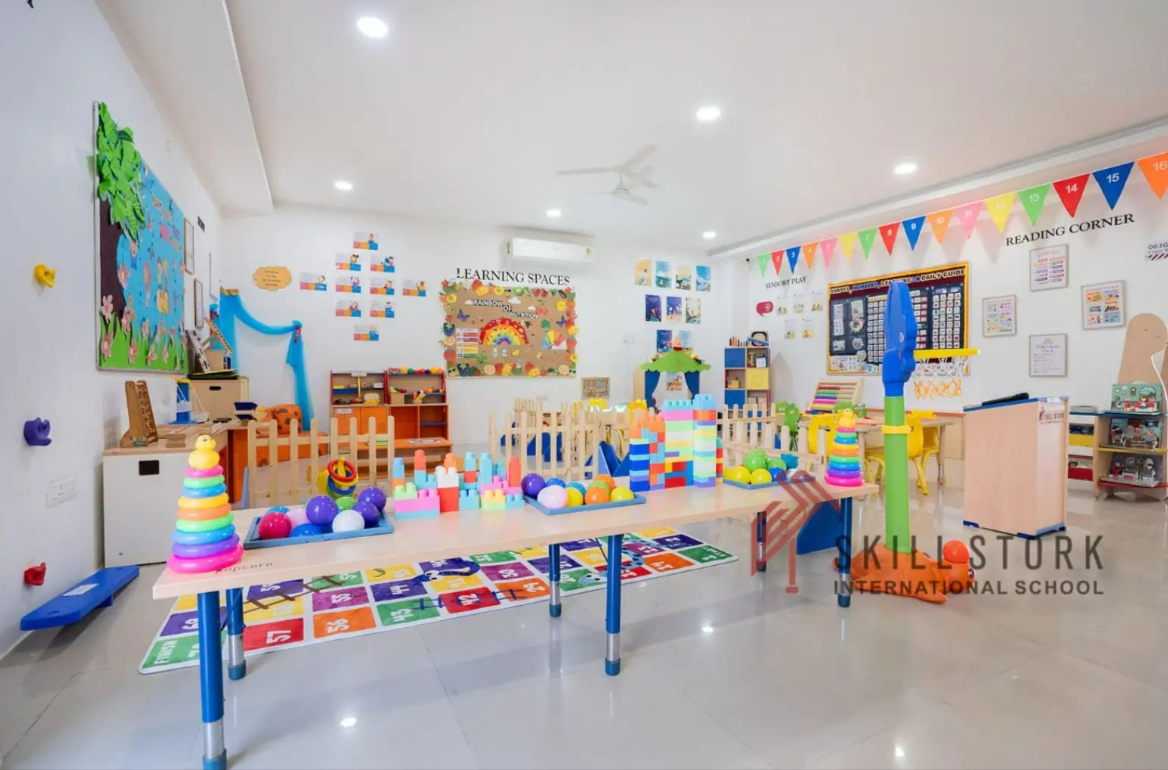
Spacious & Well-Lit Areas
Our classrooms are flooded with natural light, creates a positive atmosphere conducive to exploration, creativity, and collaborative play.

Flexible Seating
Encourages autonomy and choice, allowing children to select the learning spaces and styles that best suit their needs.

Reading Corners
Cosy and inviting spaces that support early literacy development and promote a lifelong love for reading and storytelling.

Interactive Learning Tools
Modern and engaging tools that enhance hands-on learning, stimulating critical thinking and problem-solving skills.

Outdoor Spaces
Safe and stimulating outdoor areas offering opportunities for gross motor activities, promoting physical health and well-being.

Collaborative Play Areas
Spaces designed to facilitate social interaction, teamwork, and communication through both structured and unstructured play.

Resource Accessibility
Easy access to a wide variety of learning materials, promoting independent exploration and inquiry-based learning.

Safe & Nurturing Environment
A secure space where children feel comfortable and supported, fostering emotional and social development.

Integration of Nature
Incorporating natural elements to enhance sensory experiences and foster environmental awareness from a young age.

Visit of the Month
Monthly visits to local community spaces, enriching learning through real-world engagement and discovery.

Nurturing Relationships through Engaging Learning Experiences
At Skill Stork International School, fostering relationships is integral to our academic programs, events, and classroom interactions.
- Teachers build meaningful connections with students, valuing their individual strengths, needs, and evolving curiosities.
- Regular dialogues with parents create a supportive bridge between home and school, ensuring a cohesive learning experience.
- Signature events — Activity of the Month, Celebration of the Month, Interaction of the Month, Unit Celebrations, and various school events — offer enriching opportunities for students to cultivate relationships with peers, family, and the broader community.
- The Academic Fest empowers parents to evaluate their child's progress while observing their growth and development in a dynamic learning environment.


Cultivating Symbolic Literacy and Expression in Young Learners
- Imitative Learning: Children predominantly learn through imitation and symbolic exploration, assigning meaning to the symbols and signs in their surroundings.
- Early Symbol Assignment: From age two, children instinctively begin to assign symbols such as letters to represent concepts and objects, laying the groundwork for future learning.
- Emotional Expression: Students articulate emotions and thoughts through symbols, fostering emotional literacy and self-awareness.
- Literacy & Numeracy through Symbolism: The foundations of reading and writing are rooted in understanding symbols — underscoring the intrinsic connection between literacy, numeracy, and symbolic exploration.
- Skill Expansion and Transfer: Expanding these skills across various contexts enables students to revisit their thinking, cultivate symbolic competency, forge new connections, and solidify understanding.
- Unit Integration: Each Early Years unit is meticulously crafted to facilitate students' exploration of symbols — encompassing arts, emotions, celebrations, and monthly events.

Assessment in Early Years
The Early Years program focuses on building foundational skills that serve as the groundwork for future learning. Assessments, primarily observational, are designed to track children's progress in language, literacy, numeracy, and social development.
'Skill Stork Reading Program' – An Indicator of Early Years Learning
At Skill Stork International School, the Early Years Reading Program, supported by the Oxford Reading Tree, lays a strong foundation for literacy. It helps children decipher words by recognising the correlation between letters and sounds, while expanding their vocabulary through engaging and level-appropriate texts.

Helps Decipher Words
Children learn to decode letters and sounds, building phonemic awareness and independent reading foundations.
Expands Vocabulary
Exposure to varied texts enriches vocabulary, helping children understand word meanings and language nuances.
Recognise Text Fluently
Repetition of sight words and structured texts builds reading confidence and fluency with words.
Stronger Comprehension
Practice builds understanding of sentence structure, story sequencing, and context for deeper comprehension.
Phonics Boosts Writing
Associating sounds with letters enhances not only reading skills but also spelling and writing accuracy.
Strong Thinking Skills
Reading fosters critical thinking as children infer, predict, and analyse — building problem-solving abilities.
Print Motivation
Engaging stories and characters nurture the joy of reading, motivating children to read for pleasure.
Early Literacy Skills
Exposure to books strengthens early literacy by familiarising children with the alphabet and narrative structures.
Print Awareness
Children learn to handle books, recognise print direction, and differentiate between pictures and text.
Phonological Awareness
Children grasp that letters and sounds correspond systematically, enhancing their ability to decode unfamiliar words.

What, How and Why of Assessments in Early Years
The Early Years program focuses on building the foundational skills that serve as the groundwork for future learning. Assessments, primarily observational, are designed to track children's progress in essential areas like language, literacy, numeracy, and social development.

| What | How (Assessment Type) | Why & Example |
|---|---|---|
| Engagement & Participation | Observational Assessment | To assess how children interact with stories, books, and illustrations, fostering curiosity and love for learning. Example: Teachers observe participation in group storytime. |
| Motivation & Choice | Learning Logs / Journals | Tracking book choices reveals interests and supports independent exploration. Example: Children document favourite books; teachers track evolving preferences. |
| Phonological & Phonemic Awareness | Informal Testing | Assessing ability to recognise sounds, rhyme, and blend phonemes builds foundational reading. Example: Rhyming games, sound-matching, and blending tasks. |
| Word Recognition & Vocabulary | Running Records / Checklists | Monitoring letter, sound, and word recognition tracks reading fluency progress. Example: Sight word and letter recognition through reading exercises. |
| Comprehension & Sequencing | Story Retelling | Evaluating how children retell stories shows narrative understanding. Example: Students retell events in order or arrange picture cards to reflect story sequence. |
| Reading Fluency | Reading Aloud | Fluency reflects a child's ability to read smoothly with expression. Example: Teachers assess short passages focusing on pace, intonation, and comprehension. |
| Symbolic Expression | Portfolio Assessment | Assessing use of symbols in literacy and numeracy activities. Example: Portfolios include writing samples, drawings, and number activities. |

Attributes of IB Learner Profiles
At Skill Stork International School, the development of IB Learner Profiles in our Early Years Program is integrated into every aspect of play, inquiry, and interaction, fostering well-rounded growth for children aged 2 to 6.
| IB Learner Profile | Schema Play Contribution | Reading Program Contribution |
|---|---|---|
| Inquirers | Transforming Schema encourages inquiry as children explore changes in materials. | Reading stories sparks curiosity, prompting children to ask questions and seek answers. |
| Thinkers | Connecting Schema promotes logical thinking and problem-solving as children link blocks or magnetic pieces. | Reading comprehension builds critical thinking — children reflect on plots and predict outcomes. |
| Communicators | Positioning Schema helps children express ideas while setting up play spaces. | Storytelling and reading discussions enhance verbal and non-verbal communication skills. |
| Principled | Enclosing Schema teaches responsibility through group activities and organising shared spaces. | Structured reading routines develop a sense of integrity, responsibility, and respect. |
| Open-Minded | Orientation Schema encourages exploring multiple perspectives and cultural awareness. | Reading diverse stories helps children appreciate different cultures and viewpoints. |
| Caring | Transporting Schema nurtures empathy as children help peers move objects collaboratively. | Stories with themes of kindness and cooperation reinforce empathy and caring behaviours. |
| Risk-Takers | Rotational Schema allows children to explore new movements, fostering confidence. | Reading unfamiliar words encourages intellectual risk-taking and decoding new concepts. |
| Balanced | Trajectory Schema through physical movement balances activity with cognitive tasks. | Reading develops cognitive skills while allowing children to manage time and emotions. |
| Reflective | Positioning Schema prompts reflection as children evaluate their setups and creations. | After reading, children reflect on themes, characters, and outcomes. |
| Knowledgeable | Schema play fosters knowledge across multiple domains through hands-on exploration. | The Reading Program expands vocabulary and comprehension, growing language knowledge. |


Importance and Development of IB Elements in Early Years
Concepts and Approaches to Learning Skills — integrated across all subjects, linked to real concepts, and supported by leading questions that deepen children's understanding.
Thinking Skills — Example Concept: Senses
| Sub-Skill | Integration Across Subjects | Examples | Specified Concepts | Leading Questions |
|---|---|---|---|---|
| Critical ThinkingAnalysing, Evaluating, Forming Decisions | Science, PSPE, Art, Music | Students observe objects on a sensory walk (science), evaluate textures using touch (art), and group objects by feel. | Form – What is it like? Connection – How are they connected? | What are the five senses? How do different objects feel, sound, or taste? |
| Creative ThinkingGenerating Novel Ideas, New Perspectives | Math, Language, Visual Arts, Science | Students brainstorm new ways to classify sounds in music, then represent sound patterns creatively in visual arts. | Perspective – What are the points of view? Function – How does it work? | How do people experience the world differently through their senses? How do animals experience senses differently? |
| Information TransferUsing skills in multiple contexts | Math, Science, Language | Students explore how sensory experiences change depending on environment (light and sound), then apply to new problems. | Causation – Why is it like this? Change – How is it transforming? | Why do certain smells remind us of past experiences? How do our senses change as we grow older? |
| Reflection & MetacognitionIdentifying strengths, areas for improvement | PSPE, Language, Science | Students reflect on sensory experiences, discussing what they learned about their bodies and how senses help in daily tasks. | Responsibility – What is our responsibility? | How can we take care of our sensory organs? How should we behave when someone has a sensory impairment? |
Research Skills — Example Concept: Climate / Weather
| Sub-Skill | Integration Across Subjects | Examples | Specified Concepts | Leading Questions |
|---|---|---|---|---|
| Formulating & PlanningIdentifying questions, outlining research plans | Science, Math, Geography | Students brainstorm questions about weather, create a daily weather chart, and plan data gathering on temperature and precipitation. | Form: What is it like? Function: How does it work? | What does weather look like today? How does rain happen? How does the sun help us stay warm? |
| Data Gathering & RecordingCollecting, organising, documenting data | Math, Science | Students gather weather data over a week, organise it in tables and graphs, and explore connections between weather and seasons. | Causation: Why is it like this? Connection: How is it connected? | Why does it rain? Why do we wear different clothes in different weather? Why do leaves fall in certain seasons? |
| Synthesising & InterpretingCombining information, making sense of data | Science, Language, Math | Students interpret weather patterns by comparing data collected over a month and discuss how weather differs between climates. | Change: How is it changing? Perspective: What are the points of view? | How does the weather change during the day? What is your favourite type of weather, and why? |
Communication Skills — Example Concept: Celebrations
| Sub-Skill | Integration Across Subjects | Examples | Specified Concepts | Leading Questions |
|---|---|---|---|---|
| Exchanging Information | Science, PSPE, Social Studies | Circle time discussing family celebrations and sharing traditions, listening and interpreting different perspectives. | Form: What is it like? | What are celebrations? How do different celebrations look in different cultures? |
| Listening Attentively | Language, PSPE, Music | Students listen to traditional songs played during celebrations and discuss their significance. | Connection: How is it connected? | How do songs during celebrations connect to the culture? |
| Interpreting | Language, Social Studies | Students interpret images, videos, or stories about celebrations from different countries. | Perspective: What are the points of view? | How do people in different countries celebrate the same holiday differently? |
| Speaking | Language, Art | Students describe their favourite celebration — food, clothing, traditions — and share with classmates. | Responsibility: What is our responsibility? | How can we be respectful of others' celebrations? Why is it important to include everyone? |
| Symbolic Exploration – Reading, Writing & Maths | Language, Math, Visual Arts, Social Studies | Students read picture books about celebrations, create artwork, and use graphs to compare how many students celebrate each event. | Change: How is it changing? | How have celebrations changed over time? How do they differ across seasons? |
| Writing | Language, Art | Students write invitations for a mock celebration or create a simple poster about a cultural event. | Function: How does it work? | What do we do during celebrations to make them special? Why do different people celebrate different things? |
| Mathematics | Math, Social Studies | Students create simple bar charts to compare types of celebrations in their community and analyse patterns. | Connection: How is it connected? | How do celebrations involve counting, planning, or managing resources? How do different celebrations relate to each other? |
Social Skills — Example Concept: Transport System
| Sub-Skill | Integration Across Subjects | Examples | Specified Concepts | Leading Questions |
|---|---|---|---|---|
| Interpersonal Relationships | PSPE, Language, Geography | Students work in groups discussing how they travel to school and share stories about different modes of transport. | Form, Connection, Function, Change | What kinds of transport do we use? How do transport systems connect people across cities and countries? |
| Social & Emotional Intelligence | PSPE, Language, Math | Students role-play scenarios helping someone at a bus stop or talking about waiting in line for a bus. | Causation, Responsibility, Perspective | Why do we need to follow rules in transport systems? Why is it important to be polite and kind on public transport? |
Self-Management Skills — Example Concept: Plants
| Sub-Skill | Integration Across Subjects | Examples | Specified Concepts | Leading Questions |
|---|---|---|---|---|
| Organisation | Science, Math, Language | Students organise their time to plant seeds, water plants daily, and track plant growth in a journal. | Form, Function, Responsibility | What do plants need to grow? How do we organise our time to take care of plants? |
| Mindfulness | Science, PSPE, Art | Students practise mindfulness by observing plants closely, noticing leaf colour and shape, and feeling the soil. | Connection, Form | How do plants make us feel calm or focused? How does taking care of plants help us connect to nature? |
| Perseverance | Science, Math, PSPE | Students continue to care for a plant even when it takes time to grow or when faced with challenges like dry soil. | Causation, Change | Why do plants take time to grow? How can we help a plant grow even when it faces challenges? |
| Resilience | Science, PSPE, Language | Students reflect on how they feel when their plant doesn't grow as expected and discuss ways to improve plant care. | Responsibility, Change | What can we do to help a plant recover if it's not growing well? How do plants recover after facing challenges? |

PP2 Graduation Ceremony: A Milestone in Transition
Our Early Years Programme (EYP) concludes with a Graduation Ceremony for PP2 learners, marking their achievements and helping them understand that they are ready to transition to the Primary Years Programme (PYP).
Give Your Child the Best Start
Discover how Skill Stork's IB Early Years Programme nurtures every child's natural curiosity, creativity, and love for learning from day one.