
STEM Learning
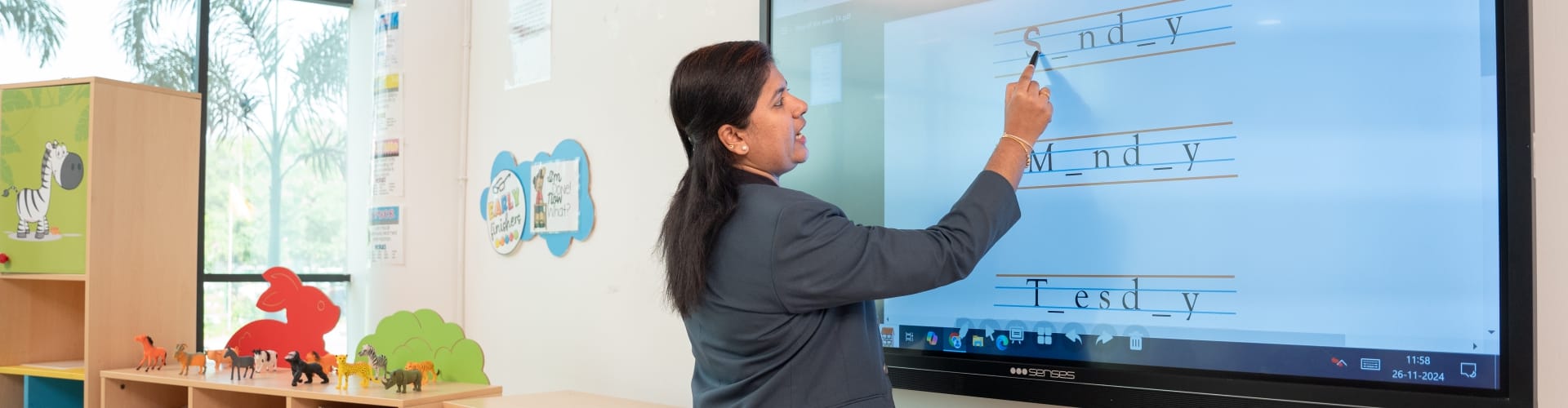
Play-Based Exploration and Inquiry STEM integration in the Early Years emphasises play-based exploration, fostering creativity, curiosity, and foundational skills. The hands-on, experiential learning approach ensures that young learners connect with STEM concepts through activities that are both enjoyable and educational.
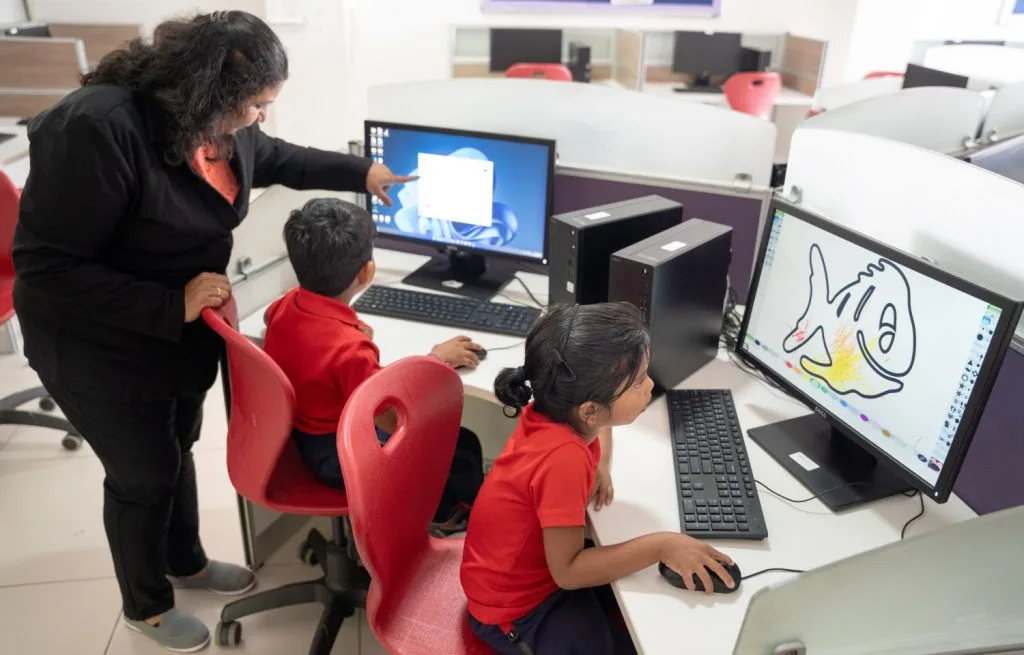
Key Features
Lego Story Play-Based Learning
Enhances spatial awareness, collaboration, and foundational engineering concepts as children construct stories and build thematic structures.
Geometric Shapes with Polydrons
Develops understanding of basic geometry, pattern recognition, and 3D spatial reasoning through shape building and sorting games.
Interactive Pop-Up Stories
Combines storytelling with scientific curiosity, introducing themes like habitats and the water cycle.
Block Play for Engineering Concepts
Encourages experimentation with balance, stability, and problem-solving through tower-building tasks.
Sensory Play
Explores scientific principles like absorption and buoyancy through water and sand activities.
Impact of Play-Based Exploration
- Builds inquiry skills as children naturally question and experiment with their environment.
- Strengthens motor skills and spatial reasoning through tactile, hands-on engagement.
- Develops resilience and critical thinking as children learn from trial and error.
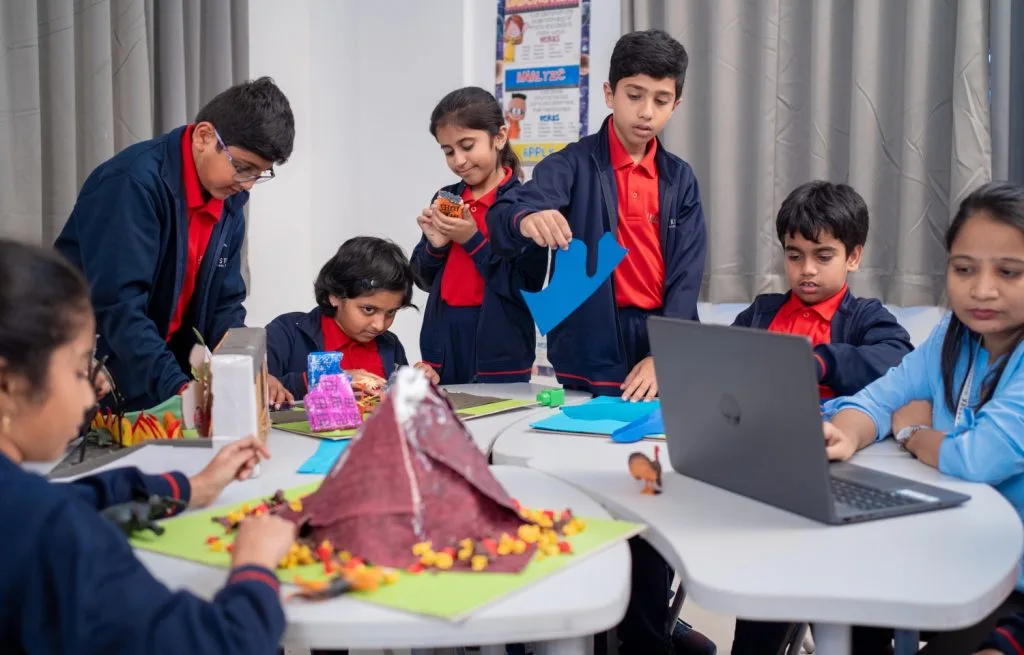
Inquiry-Based and Transdisciplinary Approach with Panchakosha Vikas STEM learning in primary school builds on inquiry-based exploration and integrates it with the transdisciplinary framework of Panchakosha Vikas — the holistic development of physical, emotional, intellectual, social, and spiritual aspects.

Inquiry-Based Learning
Students engage in guided STEM projects exploring forces, speed, friction, and life cycles through hands-on experimentation and collaborative problem-solving.

Transdisciplinary Connections
Science & Social Studies with ICT tools; Math with manipulatives like abacuses and place value blocks; Language Arts via multimedia digital storytelling.

Panchakosha Integration
Guided STEM projects and video editing encourage critical thinking, creativity, teamwork, and ethical awareness across all five dimensions of development.

Robotics with LEGO WeDo 2.0
Students design, build, and program robots, fostering early engineering skills and computational thinking through creative, project-based challenges.

Scratch Programming
Introduces coding concepts like loops and sequences through visual block-based tools in a creative, engaging environment that makes programming fun.

Interactive Math & Science Games
Reinforces foundational concepts in fractions, ecosystems, and energy sources through gamified learning experiences designed to build lasting understanding.
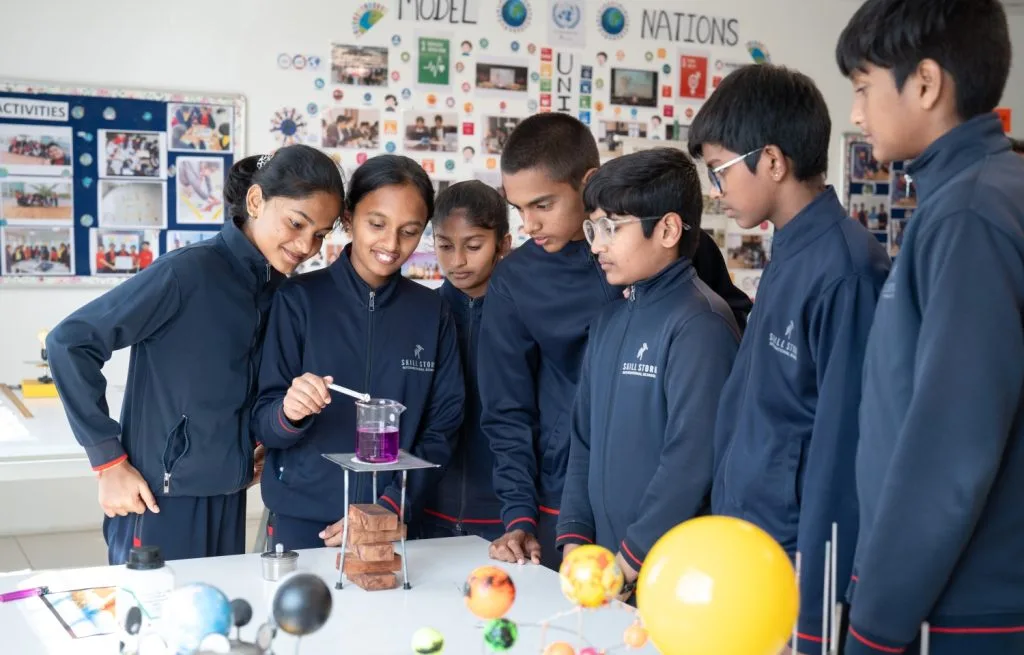
Leveraging Labs and Makerspaces for STEM Mastery As students transition to secondary school, specialised labs and makerspaces enhance their STEM learning experience by fostering innovation, analytical thinking, and real-world problem-solving.

Tinkering Lab
Encourages experimentation with circuits, 3D design using TinkerCAD, and robotics programming. Students build and test real-world solutions through iterative design.

Math Lab
Strengthens abstract concepts through hands-on tools like sextants for trigonometry and data analysis in Excel. Bridges theory and real-world application.

Social Studies Lab
Integrates technology with historical and geographical research, enhancing interdisciplinary connections and real-world awareness across subjects.

Art Lab
Combines creativity with STEM through projects like architectural model-making and video storytelling. A bridge between imagination and technical skills.

Maker Space
Promotes engineering skills with Arduino and Makey Makey for interactive circuit design and innovative projects. Students learn by making real, working things.
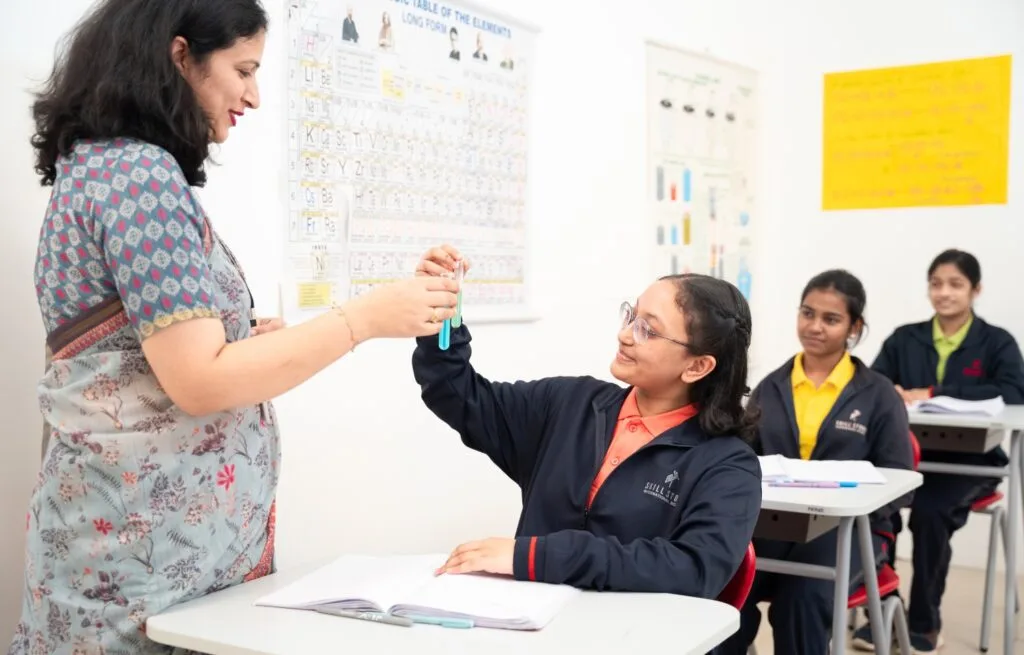
Advanced STEM Learning Through Specialised Labs In senior secondary school, STEM learning is elevated through the integration of advanced ICT tools, state-of-the-art science labs, and specialised facilities that prepare students for higher education and professional careers.


ICT Lab
Develops digital literacy and programming skills through Python, data analysis, and multimedia projects. Students work on real coding challenges and computational problem-solving.

Science Labs
Hands-on experimentation in physics (optics, circuits, thermodynamics), chemistry (quantitative analysis), and biology (microscopy, osmosis, ecological studies).

Math Lab
Facilitates real-world application of algebra and probability through analytical tools and project-based problem solving at the advanced level.

Engineering & Robotics Lab
Provides platforms like EZ Robot for advanced robotics and coding tasks, preparing students for engineering pathways and higher education in STEM.
Discover STEM Learning at Skill Stork
From play-based exploration in Early Years to advanced lab research in Senior Secondary — STEM at Skill Stork prepares every student for the future.