For decades, families in the Tri-cities area—Warangal, Hanamkonda, and Kazipet—operated under the assumption that a premium, globally aligned education required a move to Hyderabad. The regional perception was that while Warangal excelled in higher education, particularly through institutions like NIT and Kakatiya Medical College, its K-12 sector remained tethered to traditional, high-pressure coaching models.
That narrative has fundamentally shifted. Warangal is currently undergoing a structural transformation in its schooling sector. Parents are moving away from the narrow metrics of rote memorisation and state-wide rank lists. Instead, there is a growing demand for educational environments that prioritise cognitive flexibility, emotional intelligence, and technical literacy. This demand is the primary driver behind the proliferation of international standard schools across the city.
The Structural Shift in Educational Demand
The educational history of Warangal is rooted in academic rigour, primarily focusing on the State Board and standardised competitive exam preparation. While this produced disciplined graduates, the modern global economy now requires a different set of competencies. Today’s professional world values the ability to synthesise information over the ability to recall it.
This shift in the job market has created a functional gap that traditional schooling models are struggling to bridge. We are seeing a distinct move toward a quality of education in Warangal that mirrors international benchmarks. Local institutions are transitioning from the “lecture-and-listen” method to inquiry-based pedagogies. This is not merely a stylistic change; it is a response to the realisation that students in Tier-II cities must possess the same soft skills and analytical tools as their counterparts in major global hubs if they are to remain competitive.
Parents in the region are increasingly observant of these trends. They recognise that a child’s capacity for critical analysis is a more durable asset than a high score achieved through repetitive drills. Consequently, the educational trajectory in Telangana is tilting toward schools that offer integrated learning environments rather than isolated textbook instruction.
Curricular Frameworks: Navigating the Choice Between IGCSE and CBSE
The most significant differentiator for an international school is its curriculum choice. In Warangal, the market is currently split between the Cambridge (IGCSE) path and the modernised CBSE framework. Understanding the nuance between these two is essential for long-term academic planning.
The Logic of the IGCSE Path for Global Aspirations
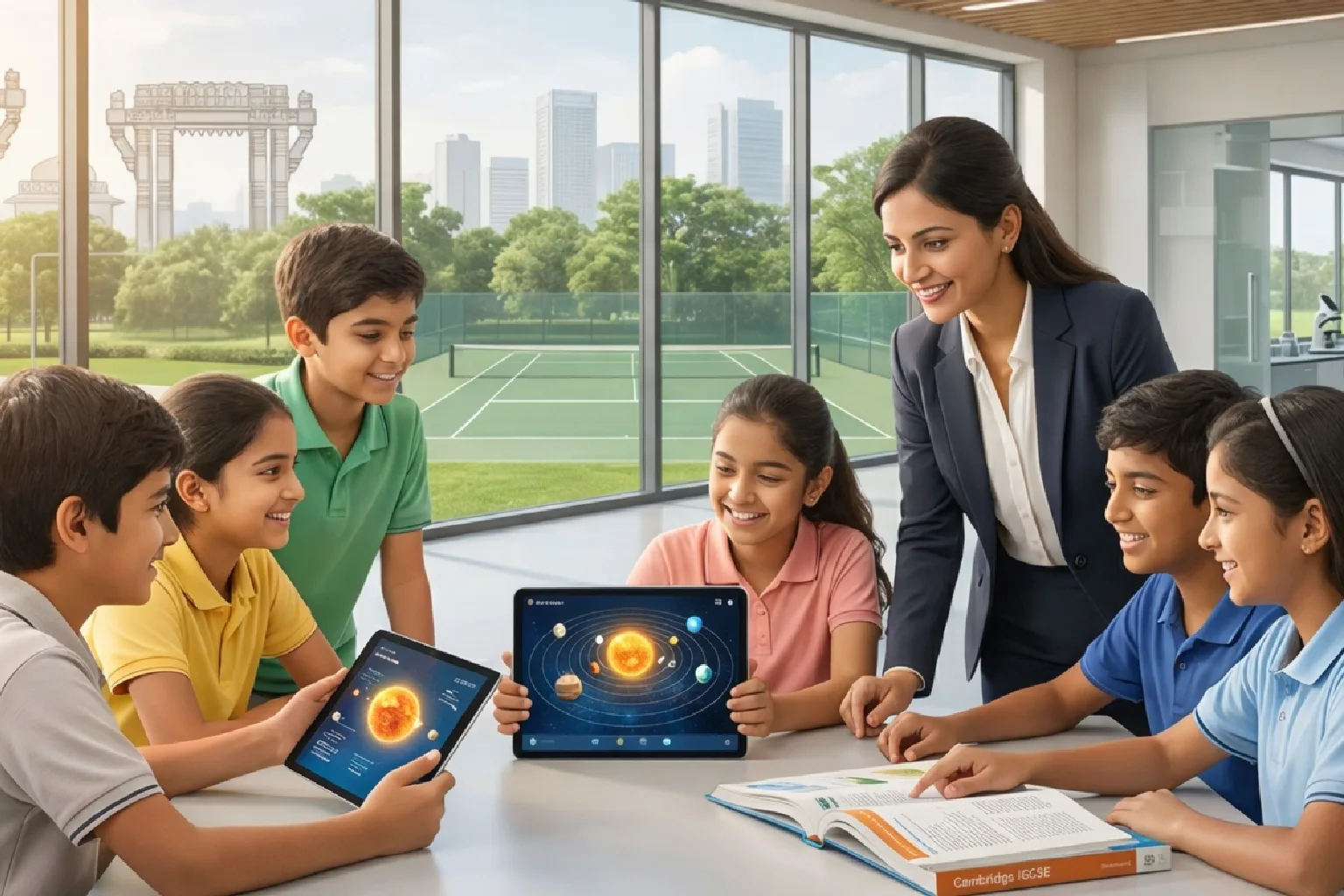
For families who intend for their children to pursue undergraduate degrees in the United Kingdom, the United States, Canada, or Australia, the Cambridge International General Certificate of Secondary Education (IGCSE) is the logical choice. IGCSE schools in Warangal provide a syllabus recognised by universities and employers worldwide.
The methodology here focuses on the “application of knowledge.” In a typical IGCSE physics assessment, for instance, a student is rarely asked to define a term. Instead, they are presented with a practical problem that requires them to use the principle to find a solution. This approach builds an analytical portfolio that is highly attractive to admissions officers at foreign institutions. It moves the student away from the “what” of learning and deeply into the “how” and “why.”
The Strategic Value of CBSE International Models
While global exposure is a priority, many families prefer to remain connected to the Indian competitive framework, particularly if the student aims for the IITs (JEE) or medical school (NEET). This is where CBSE international schools in Warangal occupy a vital niche.
These institutions offer a hybrid model. They utilise the robust, content-heavy CBSE syllabus—which is foundational for Indian competitive exams—but deliver that content through modern teaching methodologies. Students receive the depth of Indian mathematics and science training while benefiting from the inquiry-based classroom culture of a global school. This model is arguably the most versatile option for families in Warangal who want to keep both domestic and international pathways open.
The Functional Role of School Infrastructure
In the international school segment, infrastructure is an educational tool rather than an aesthetic choice. When schools invest in facilities, the objective is to remove the barriers between theoretical concepts and practical understanding.
International standard schools in Warangal are increasingly defined by:
- Technology Integration: This goes beyond having a computer lab. It involves using digital tools to visualise complex data, collaborate on projects in real time, and access global libraries.
- Specialised Laboratories: Standard schools often treat labs as demonstration areas. In an international framework, labs are designed for individual experimentation. Each student has the space to fail, iterate, and discover, which is the cornerstone of scientific literacy.
- Physical Education as a Discipline: Sports are no longer treated as a break from studies. Structured programs in swimming, tennis, and athletics are integrated into the timetable, led by professional coaches. This is recognised as essential for developing grit, teamwork, and physical health.
School Comparison Table
| Feature | Traditional Private Schools | International Standard Schools |
|---|---|---|
| Instructional Tools | Chalkboards and printed charts | Interactive displays, VR simulations, and digital tablets |
| Student-Teacher Ratio | 40:1 or 50:1 | 15:1 to 25:1 (Focus on personalization) |
| Athletic Facilities | Open playgrounds | Multi-sport complexes, pools, and specialized coaching |
| Safety and Security | Basic gates and manual registers | CCTV, RFID tracking, and strict visitor protocols |
| Classroom Design | Fixed rows, front-facing | Modular seating for collaborative group work |
Beyond the Classroom: The Development of Non-Cognitive Skills
The term “holistic development” is frequently used in marketing, but in a professional educational context, it refers to the development of non-cognitive skills—specifically leadership, empathy, and resilience.
Legacy schooling models often confined a student’s identity to their grade point average. Modern institutions in Warangal operate on the philosophy of experiential learning. This involves significant investment in programs like the Model United Nations (MUN), public speaking workshops, and community service initiatives.
When a student participates in a debate or manages a school-wide event, they are learning project management and conflict resolution. These are the skills that determine professional success in the 2030s and beyond. The benefit for students in Warangal is that they no longer have to wait until college to access these leadership opportunities.
The Critical Importance of Early Years Education
Cognitive science suggests that the most formative years for a child’s brain development occur between the ages of 3 and 10. International schools in the region are placing a heavy emphasis on these “foundation years.”
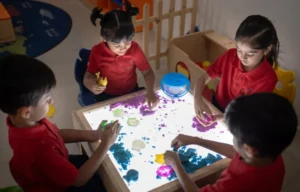
The best primary schools in Warangal have moved away from the “heavy bag” culture. Instead, they adopt inquiry-based models for grades K-5. The curriculum is designed to harness a child’s natural curiosity. If a child asks why the moon changes shape, the teacher doesn’t just provide a one-sentence answer; they lead a week-long project where students track the moon’s phases and build models.
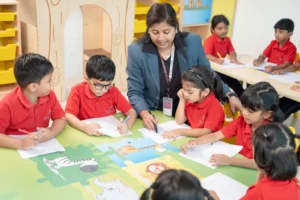
Furthermore, a low student-teacher ratio is vital at this stage. It allows educators to identify specific learning styles. Some children are visual learners, while others are kinesthetic. In a small classroom setting, the teacher can adapt their instruction to ensure no child is left behind or bored by a lack of challenge.
Preparing Students for a Shifting Economic Reality
The job market is currently experiencing rapid change due to the integration of Artificial Intelligence and automation. The skills that were once considered “safe”—such as basic accounting or routine programming—are the most vulnerable.
Schools focusing on quality education in Warangal are counteracting this by teaching “future-ready” skills. This involves:
- Information Literacy: Teaching students how to vet sources and identify misinformation.
- Adaptive Thinking: Encouraging students to find multiple solutions to a single problem rather than looking for the “right” answer in the back of the book.
- Cross-Cultural Competence: Using digital platforms to collaborate with students in other countries, preparing them for the reality of remote, global workforces.
By the time a student graduates from an international school in Warangal, the goal is for them to be as confident in a boardroom in Singapore or a research lab in Germany as they would be in their hometown.
Evaluating the Investment: A Realistic Look at Fees
It is a reality that international schools in Warangal carry a higher price point than traditional schools. However, it is useful for parents to view this as a strategic investment rather than a simple expense.
The fee structure is generally driven by three factors:
- Specialised Faculty: Recruiting and retaining teachers who are trained in international methodologies requires a competitive salary structure. Many of these educators are brought in from metropolitan areas or have undergone extensive professional development.
- Resource Density: The cost of maintaining high-end laboratories, digital infrastructure, and athletic facilities is substantial.
- Operational Ratios: A school with 20 students per class has half the revenue of a school with 40 students per class, but it provides significantly more individual attention.
For many parents, the return on this investment is found in the reduced need for external coaching, the improved English language proficiency of the child, and the overall safety and well-being provided by the campus environment.
Navigating the Warangal School Admissions Process
For those looking at admissions for the 2024-2025 academic cycle, timing is a critical factor. The most reputable institutions often have limited seats because they are committed to maintaining low student-teacher ratios.
Practical Steps for Parents:
- Audit the Curriculum: Do not just look at the brand. Ask to see the textbooks and the lesson plans. Ensure the curriculum aligns with your child’s long-term goals.
- Observe the Culture: When you visit a campus, look at the students. Are they engaged and questioning? Or are they silent and passive? The school’s atmosphere will tell you more than the brochure.
- Inquire About Faculty Retention: A school is only as good as its teachers. Ask about the school’s teacher training programs and how long the senior faculty have been with the institution.
Frequently Asked Questions (FAQs)
The IGCSE curriculum is focused on deep conceptual understanding and application, while the State Board is more aligned with the specific formats of Indian entrance exams. However, IGCSE students often find they have a stronger foundation for the complex word problems found in exams like JEE Advanced. If your child plans to stay in India for medicine or engineering, a CBSE international school might provide the most balanced transition.
Look beyond the lobby. Check the science labs for modern equipment and safety features. Observe the library to see if the books are current and diverse. Most importantly, observe a live classroom if possible—check if the teacher is doing all the talking or if the students are actively participating in the discussion.
Yes, because the foundation of literacy, numeracy, and curiosity is built in the primary years. If a child develops a love for learning and strong critical thinking skills by age 10, they are much more likely to succeed in the high-pressure environment of secondary school, regardless of the curriculum.
Most international schools in Warangal accept students into Pre-Kindergarten or Nursery starting at age 3. However, many parents also choose to transition their children at Grade 1 or Grade 6, which are natural entry points for more structured academic programs.
Reputable international schools offer "bridge programs" or remedial support to help students transitioning from a vernacular or traditional State Board background. Because the class sizes are smaller, teachers can provide the personalised attention necessary to bring the student up to speed with the required English proficiency and inquiry-based learning style.