The first five years of a child’s life set the groundwork for the future of their learning and health. To illustrate how unique this period is, at no other time do we see the brain forming neural pathways at such an astonishing speed. These years are not a ‘preparation phase‘ for schooling, but instead, they are the period of most rapid development for the human brain.
If we decide to wait until a child starts primary school to begin teaching them, we have already missed the period of their brain’s peak neuroplasticity. Quality early years education develops a child’s executive functioning. Quality early years education is not just about adding to a child’s knowledge but helping them acquire the very skills they need to learn. Educators and parents need to understand what the early years are about. Quality early years education is about building strong foundations in the brain. The earlier the foundation is set, the less need for interventions and the greater the chance children develop a positive attitude towards schooling.
Building the Brain During the Early Years
The brain is built over years, starting from before we are born. The most important early lessons are about building the foundation.
During the early years, one child will create over 1,000,000 neural connections per second. This is due to a process called synaptogenesis. After this, there is a process called pruning, where several connections are eliminated to improve the efficiency of the brain. This process is influenced by the child’s environment and the connections and neural pathways that are used and reinforced through stimulation and interaction. This is the reason synaptogenesis and early childhood education go hand in hand.
In early childhood, education acts as a defence against “toxic stress” and the prolonged activation of the body’s stress responses, which in turn alter the brain’s structure and architecture. “Serve and return” interactions between a child and an adult, such as a child’s gesture response to an adult’s in any way, are a necessary part of healthy brain development and are provided by a stable environment set by the early educator.
With the Right Approach, There’s No Correct Mistake
The developmental process is not uniform. Though they appear discrete, they are interconnected and overlapping, and that is the reason they can be used to determine the range of interactions the educator should engage with during this time. This guarantees that the child progresses through as many as possible of the overlapping stages and, in the case of the educator, allows for the vertical development of the child.
Establishing these phases helps keep all children on track and prevents any from falling behind during a critical early window of opportunities. Those determining these phases are able to use a focus on developmental milestones as a reference to gauge and manage the complexity of social interactions and cognitive challenges appropriate for the child.
Key Stages of Early Childhood Development
| Age Range | Primary Focus Area | Key Developmental Milestones |
|---|---|---|
| 0 – 12 Months | Sensory & Motor Skills | Recognizing faces, responding to names, crawling, basic grasps. |
| 1 – 2 Years | Language & Autonomy | Speaking first words, walking independently, imitating behaviors. |
| 3 – 4 Years | Socialization & Logic | Sharing with peers, asking “why” questions, holding a pencil, imaginative play. |
| 4 – 5 Years | Executive Function & Pre-Literacy | Following multi-step instructions, recognizing letters/numbers, managing emotions. |
Cognitive Growth and the Logic of Guided Play
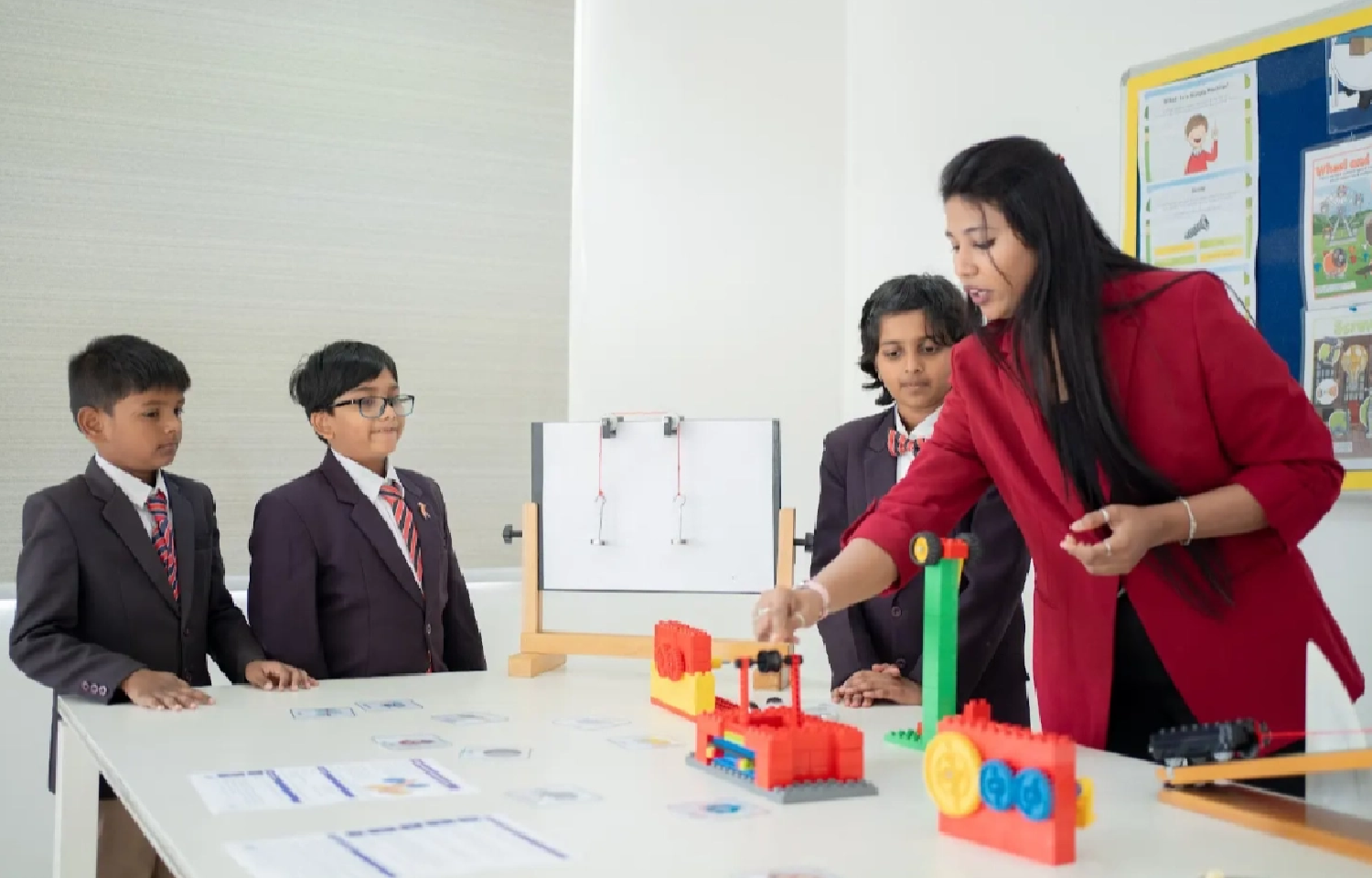
The main goal of early childhood cognitive development is recognizing patterns, retaining memory, and concentrating. When young children engage in directed play, they are attempting to formulate hypotheses about the physical and social realities. For example, building a block tower constitutes an elementary example of physics and spatial reasoning. Similarly, sorting different shapes is an introduction to the elementary principles of geometry and categorization.
The most effective early childhood educators utilize such activities to seamlessly integrate the fundamentals of pre-literacy and early numeracy without a helper, customary to pedagogy, a laboratory of rote memorization. Rather, educators use activity-based techniques to teach sequencing of events, recognition of phonemes, and quantifiable relationships. This educator-student activity paradigm is in line with the cognitive processing methodology of the young child’s brain, beginning with the concrete and transitioning to the abstract. In order to gain an understanding of how such concepts are professionally articulated, educators often refer to a structured formal academic curriculum integrating elements of educational psychology and Daily classroom activities.
The Three Pillars of Executive Function
A primary aim of early education is cultivating executive function. This umbrella term encompasses working memory, flexible thinking, and self-control. These are skills we apply every day in learning, working, and navigating day-to-day tasks. Executive function skills are critical for sustaining attention, managing behavioral and emotional regulation, and following multi-step directions.
Working Memory
The ability to retain and manipulate distinct pieces of information over short spans of time.
Mental Flexibility
The ability to shift attention between tasks or apply different rules in different settings.
Self-Control
The ability to prioritize and resist impulsive actions or responses.
In preschool, skills are reinforced and built throughout games and routines. For example, an instruction involving three steps, such as “put away your coat, wash your hands, and sit at the table,” helps strengthen working memory. Shifting from “free play” to “circle time” is an example of requiring mental flexibility. Waiting for a turn to speak is practicing self-control. These skills are prerequisites for learning, and therefore, are not “just soft skills.”
Benefits of Social-Emotional Learning and Peer Mediation
If a child is not emotionally mature enough to be in a classroom, academic readiness becomes irrelevant. Early education helps to set a structure within which children can socialize and form relationships with peers and adults outside the immediate family, which is critical for learning emotional regulation.
With professional guidance, children learn to take turns, share, and work through minor disagreements. They learn to deal with the frustration of not getting their way and are coached to deal with the frustration constructively. This socio-emotional conditioning builds resilience. Children who attend quality programs show increased levels of empathy and self-regulation, which positively affect their ability to work with others in school and work later in life.
The Economic Reality: The Heckman Equation
The benefits of early education don’t just stop with the individual child; they impact the economy as a whole. Nobel Prize-winning economist James Heckman has analyzed the return on investment (ROI) of early childhood programs, which has come to be known as the “Heckman Equation.” Heckman determined that each dollar invested in quality early childhood education has a return of 7 to 10 dollars to society.
This return on investment happens in several ways:
Fewer children requiring remediation: Children who have a strong early foundation are less likely to need to be held back or need special education.
More people working: The ability of parents to work is improved when there is reliable early education.
Longer-term increased earnings: Children who receive a quality education are more likely to graduate, which leads to increased taxes and decreased government expenditures as a result of less social assistance.
In essence, providing quality early childhood education is a great economic development strategy. It addresses the achievement gaps before they become entrenched and expensive to fix.
Lessons from Longitudinal Studies: Impacts Over Time
The benefits of early childhood education become more apparent many years after a child departs from the classroom. Longitudinal studies like the Perry Preschool Project have followed participants for more than 40 years, and consistently demonstrate the advantage of skills gained during these critical early years.
Participants in high-quality programs were more likely to improve overall outcomes: high school graduation, steady employment, home ownership, lower involvement in the criminal justice system and better health. These outcomes suggest that the emotional regulation and executive function gained during age four have a positive ripple effect on decision-making later in life. You can see this evolution in cited success stories where the implementation of early interventions resulted in a high level of sustained outcomes.
Comparison of Outcomes Based on Early Education Access
| Life Stage | High-Quality Early Education Access | No Formal Early Education Access |
|---|---|---|
| Primary School | Higher reading/math readiness; lower behavioral issues. | Increased risk of developmental delays and remediation. |
| Adolescence | Higher GPA; increased participation in extracurriculars. | Higher rates of grade retention and school dropout. |
| Adulthood | Higher employment stability; higher health literacy. | Lower average lifetime earnings; higher healthcare costs. |
Quality of Teaching and Environment
The positive outcomes described above hinge on the fact that not all early childhood experiences are the same. One of the most important considerations on the quality of a program relates to quality assurance based on a combination of structural and process elements.
Examples of structural elements include ratios of teachers to children, group sizes, and staff education levels. Process elements refer to experiences in the class where interactions are warm, language used is rich, and materials are varied.
Professional early learning environments are not ‘daycares‘ in the sense of passive oversight. They are environments where teachers scaffold learning. Scaffolding is temporary support for learning new skills that is then gradually withdrawn once the learning becomes self-sustaining. This calls for a considerable amount of professional training and expertise in the field of learning development.
Health and Nutrition Integration
What children learn in early education programs is greatly determined by how their basic needs are met. If a child is hungry, tired, or has undiagnosed vision and hearing issues, learning cannot take place.
Good quality early education programs incorporate health screening and nutritional support, ensuring the child’s needs are met. This is the ‘whole child‘ approach that recognizes the mind and body connection; a healthy child is also able to learn. A child’s development is determined by their physical health, and in turn, healthy children display the concentration and sustained effort needed for cognitive growth.
Getting Ready for Primary School
The last year in Early Childhood Education ideally entails getting kids ready for primary/first school. It’s a bit more involved than just making sure kids are ready to start tackling first-grade-type subjects. It’s also about building children’s confidence and endurance to engage in more structured academic settings.
Building school “readiness” skill also includes these areas:
Independence: Being responsible for one’s own belongings and hygiene.
Social: Ability to follow multi-step instructions and work in teams.
Early literacy: Having a good grasp of vocabulary as well as understanding the mechanics of print.
Children who have developed these skills can focus on the more advanced learning in reading and math.
Investing in Early Childhood Education lays a strong foundation for a child’s future. It creates neuro-connections for a lifetime of learning and developing a love for learning. It also helps develop social-emotional skills for the complexity of the world. Children today are the adults of tomorrow, and for the emerging professional world, the learning environment needs to have a developmentally appropriate philosophy to support the attainment of these desired goals.
Frequently Asked Questions (FAQs)
The most important benefit is the development of 'executive function', the cognitive process that allows one to plan, focus, follow directions, and multitask successfully. These processes develop when the brain is most malleable (0 to 5 years), setting the baseline for all future academic and career success.
Children learn socialization skills from early education in a safe and supervised setting. These include the ability to mediate disputes, resolve conflicts and show empathy, after being taught outside their familial relationships. Emotion and social regulation are key indicators of success in higher education and the workplace. Children who can manage their emotions and work with others are most likely to succeed.
Studies show that play-based learning is far superior to rote academic instruction, which is an approach that emphasizes memorization and repetition. In a teacher-directed and play-based setting, children acquire the necessary underpinnings, like spatial reasoning, logic and phonemic awareness, for future academic success. Young children who are taught using purely academic methods often experience school burnout and develop a negative attitude towards school.
Investing in early childhood education ensures better long-term outcomes. Early education can save future societal investments related to special education, health care, grade retention, juvenile and adult corrections. For each dollar invested in high-quality early childhood education, economists project a return of $7 to $10.
High-quality early education will maintain a low child-to-teacher ratio. Young children learn through guided play, so a balanced curriculum will contain structured activities. Early childhood education is a specialized field so that high-quality programs will employ educators with this background and training. High-quality programs will also prioritize serve-and-return interaction. The teacher will purposefully respond to a child’s question. They will initiate a follow-up question or respond with a related comment to further a child’s inquiry or action.